
Mississippi Corrections Release Paths
A person leaving MDOC may move to parole, Earned Release Supervision, another custodian, or full discharge. Parole is conditional community release after Board action. ERS is a community placement in which the person retains inmate status under MDOC jurisdiction until sentence expiration. A transfer or detainer can move the person directly to another agency. Full discharge ends the state correctional sentence or supervision reflected in the discharge record.
Those outcomes cannot be collapsed into “released from Lee County.” The Lee County/Tupelo Adult Detention Facility may send a sentenced person to MDOC, which is a transfer from county custody rather than a community release. Later departure from an MDOC institution is a separate state event. The county Arrest/Release Form proves the first departure or transfer. MDOC location history, parole records, time computation, and a discharge certificate explain the state path.
Confirm Mississippi Corrections Release Records
The official MDOC inmate search accepts First Name, Last Name, or MDOC ID Number. Use the ID when available. Open the detail and match the full record, not only the name or photograph. Read Location, Unit, Location Change Date, sentence information, and the exact field “Tentative Release Date.” A community ERS location may show physical release from an institution while inmate status continues.
- Search the MDOC number, or use full name and spelling variants when no number is known.
- Compare identity, conviction county, sentence data, Location, Unit, and Location Change Date.
- Record “Tentative Release Date” with its qualifier. Do not present it as actual departure.
- Search the separate parolee database when active parole may explain community supervision.
- Ask MDOC Records for actual release or discharge date, mechanism, status history, and discharge documentation when the public tools are incomplete.
No official promise says fully discharged people remain indefinitely searchable or that every detail displays a literal “Released” or “Discharged” status. A missing result is not proof that no state record exists. It is a reason to use the records channel.
Mississippi Corrections Offender Detail
The public detail can include a corrections photograph, full name, MDOC number, physical descriptors, Entry Date, Location, Unit, Location Change Date, number and total length of sentences, conviction county, sentence date, and offense-level information. At the bottom, the prospective date is labeled Tentative Release Date. Location is as important as the date because it distinguishes an institution from a community supervision setting.
| Field | Release-record use |
|---|---|
| MDOC number | Matches the state correctional identity |
| Location and Unit | Separates prison placement from community ERS |
| Location Change Date | Dates the displayed assignment change |
| Sentence information | Links the record to the conviction and term |
| Tentative Release Date | Shows a prospective milestone, not actual discharge |
The official MDOC search form shows the limited fields used to begin the lookup.
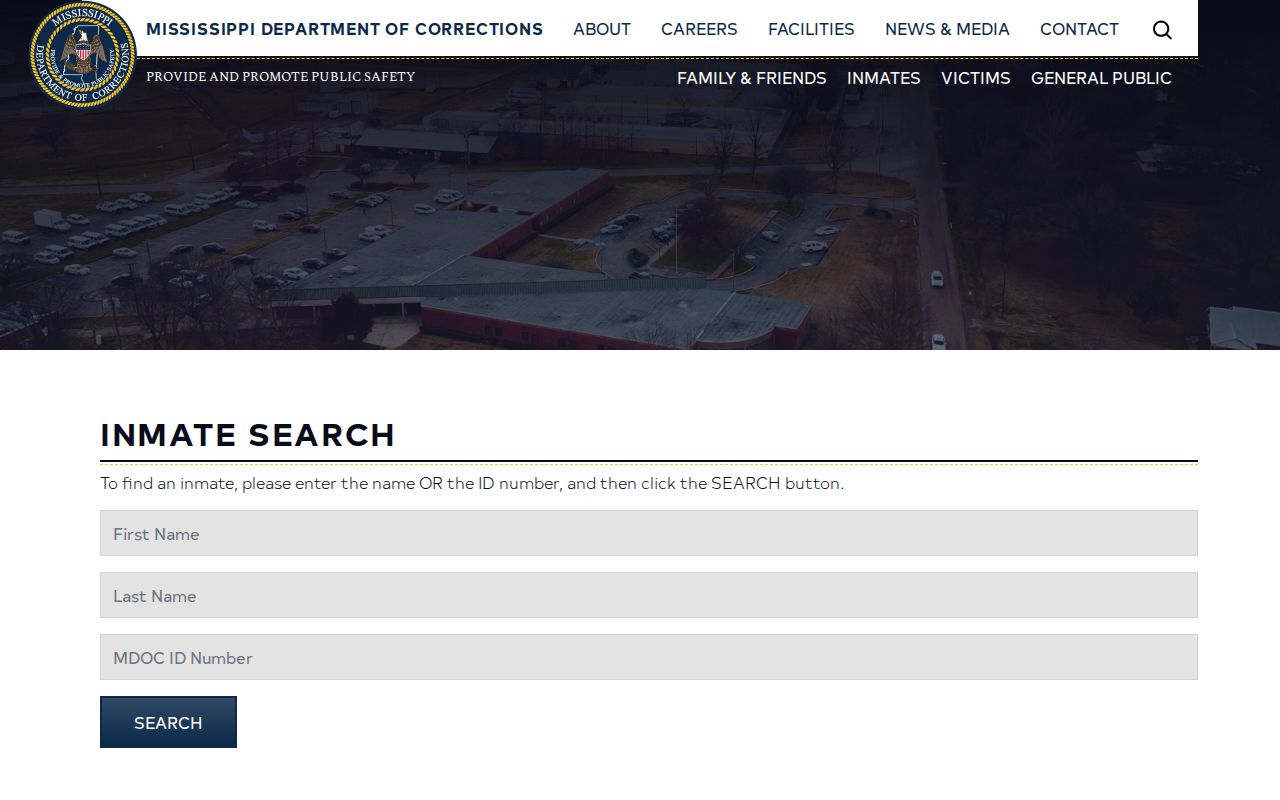
The resulting detail must be read in full because the search form alone cannot distinguish custody, ERS, parole, or discharge.
Lee County to MDOC Transfers
No MDOC prison was identified within Lee County. MDOC still matters because Lee County’s transport unit moves sentenced people to the state system. When a person vanishes from the county active roster, a new MDOC location can show that responsibility changed. That movement is release from Lee custody to MDOC, not proof the person returned to the community.
Check the county’s verified Released Last 72hrs feed, then obtain the sheriff’s Arrest/Release Form if the destination or exact time matters. Search MDOC by name or ID and inspect the court commitment papers. If a VINE notice follows the record from county custody into MDOC, read its reporting agency and event language. Mississippi’s Registration Link can preserve notification across that transfer, which helps explain why several alerts may occur close together.
The Lee County release search and records workflow provides the county branch for this two-system inquiry. Keep the county booking number and MDOC number separate. They identify records created by different custodians.
Mississippi ERS and Parole Releases
An official MDOC detail showing “NORTH MISSISSIPPI EARNED RELEASE SUPERVISION” demonstrates the key ERS distinction. The person may live in the community while MDOC continues to classify the person as an inmate. Under Miss. Code § 47-5-138, qualifying early release can continue under ERS through sentence expiration. Revocation can return the person to more restrictive custody.
Parole is shown through a separate Mississippi parolee search. It accepts name or MDOC number and allows City and County filters. A match verifies active parole supervision. It does not state when the Lee jail released the person or replace a state discharge record. The Lee Probation & Parole Office is the local supervision point, not a detention facility.
The official ERS example shows how a community-named location appears within an inmate detail.
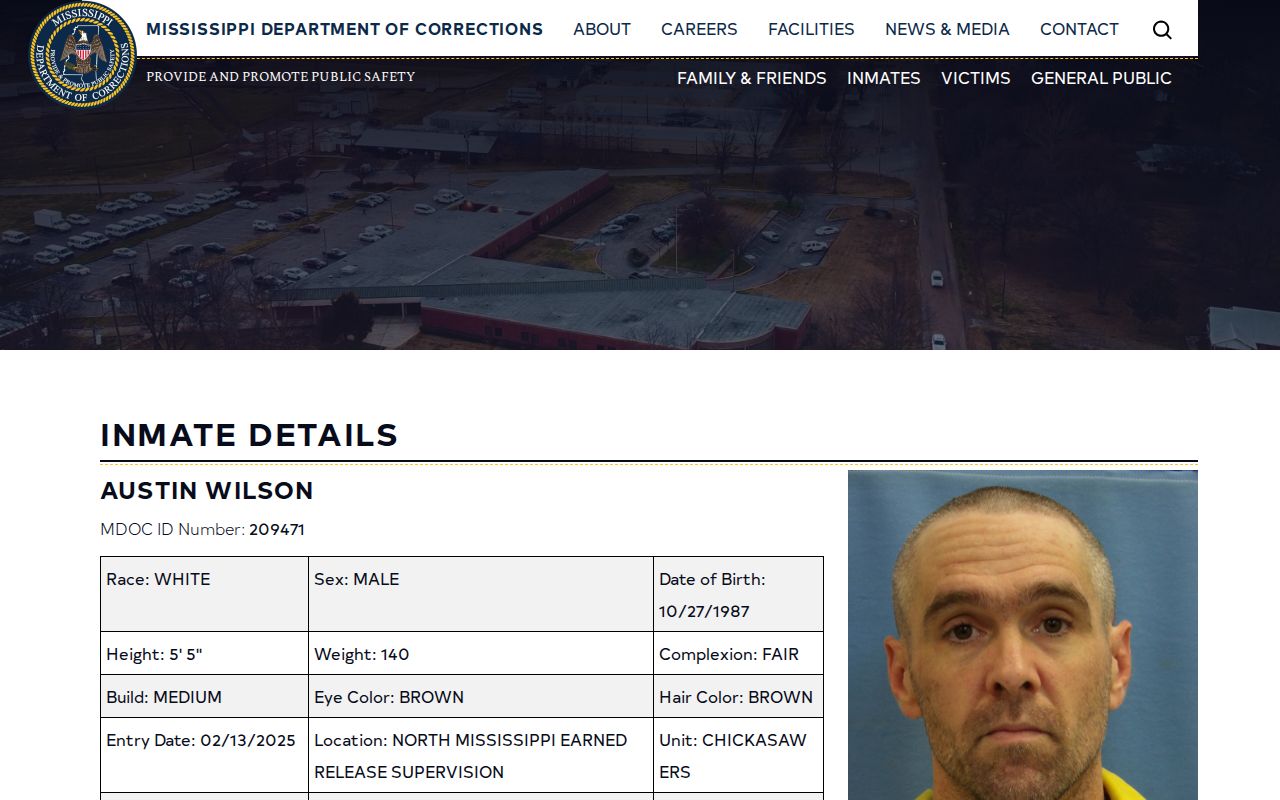
The image supports the status distinction, not a claim about any Lee County person.
Mississippi Corrections Release-Date Limits
MDOC computes parole dates, ERS dates, tentative release or discharge dates, and maximum dates. Presentence Lee County jail credit tied to the right cause number may enter that work after county verification. Sentence structure, eligibility, detainers, and later orders also matter. A public tentative date is not permission to calculate or promise the release.
For eligible post-June 1995 sentences, state law permits 4.5 days of earned time for each 30 days served, based on conduct and performance, capped at 15 percent. The common “roughly 85 percent” phrase is conditional, not a fixed release rule. Exclusions, loss of credit, concurrent or consecutive terms, parole, ERS, holds, and court changes can alter the outcome. MDOC states that processing may take 30 to 45 days and that a discharge certificate is required before release.
The state handbook says MDOC verifies county jail credit connected to the cause number and communicates the actual release after required checks. The Lee court file and sheriff verification are useful inputs, but neither office performs MDOC’s final time calculation. When sentence dates, credits, or locations look inconsistent, identify the cause and MDOC numbers in a narrow request so Records can match the correct term.
Mississippi Corrections Records Contact
For historical proof, request the actual release or discharge date and mechanism, the nonexempt status and location history, a nonexempt time sheet showing applicable jail credit, and the discharge certificate or status-change record. Keep the request narrow. The Mississippi Public Records Act allows nonexempt portions to be produced while protected content may be withheld or redacted.
MDOC Records
P.O. Box 24388
Jackson, MS 39225
Phone: 601-933-2889
Email: MDOCRecordsDepartment@mdoc.state.ms.us
MDOC Legal/Public Records
301 N. Lamar Street
Jackson, MS 39201
Fax: 601-359-5735
Email: legalpublicrecords@mdoc.state.ms.us
Written requests only
Juvenile, sealed, expunged, medical, security-sensitive, victim, and other protected matter may not be disclosed. Ask for segregable nonexempt portions and the cited legal basis for any withholding. Do not try to reconstruct a suppressed Lee County record from an older state image or list.
Mississippi’s public-records policy does not make every field or photograph public in every case. A useful request names the document and the status distinction it must answer. It can ask for the latest nonexempt offender photograph only when needed to match the state record, but a corrections image is not necessarily the booking photo created by Lee County. Each custodian controls its own image and release documentation.
Reconcile Mississippi Release Sources
If MDOC shows a future tentative date while relatives believe the person left prison, read Location and Unit first. ERS may explain both facts. Ask Records whether the person is institutionally confined, on ERS, paroled, transferred, or discharged and request the date of the actual status change. If the Lee County jail was the prior custodian, obtain its form as well.
A VINE alert is an official notification route, but the contributing agency confirms the event. A parolee match proves active parole, not the Board’s public decision record. A court order establishes legal authority, while MDOC establishes the state custody transition. Preserve exact terms such as tentative, eligible, ERS, paroled, transferred, released, and discharged. They mark different points in a sentence.
Note: When sources conflict, record each access date and label, then ask the record owners to resolve the status.