
Lee County Released Inmate Records
A release is the end of one booking or one agency's custody, not proof that all custody has ended. The Lee County/Tupelo Adult Detention Facility receives prisoners for the sheriff, Tupelo, and other Lee County municipalities. Its active Tiger roster shows current county custody. The separate Released Last 72hrs feed is the public signal for a recent departure from that booking. A person may have returned to the community, moved to court, entered Mississippi Department of Corrections custody, or transferred under another agency's authority.
The agency that released the person controls the strongest event record. The sheriff's Arrest/Release Form documents a Lee County jail departure. MDOC records address a state sentence, parole, Earned Release Supervision, or discharge. A filed court order explains the legal authority, while VINE reports an agency-supplied custody event. BOP, the U.S. Marshals Service, and ICE each answer narrower federal questions. These records must be reconciled because several may describe different parts of the same movement.
A name that vanishes from the active roster may have been released, transferred, or moved under another hold. Check the release feed and destination records before drawing a conclusion.
Lee County Release Paths Compared
Lee County public detail does not print a release-reason field, so no specific mechanism should be assigned from a bond amount or a missing name. Bond, a court order, time served, sentence completion, and dismissal can end a county booking. State commitment, a detainer pickup, or a transfer also ends Lee County custody without placing the person back in the community.
| Event | What it establishes | Best next source |
|---|---|---|
| County booking released | Tiger categorized the booking as released | Sheriff Arrest/Release Form |
| Transfer or state commitment | Lee custody ended but another custodian may hold the person | MDOC, court order, or receiving agency |
| Parole or ERS | Physical prison custody may end while state supervision continues | MDOC detail and parolee search |
| Full discharge | The sentence or supervision reflected by that record ended | MDOC discharge record |
| Federal or ICE movement | Only the named federal system's custody changed | BOP, federal court/USMS, or ICE |
- Release
- The end of a particular booking or custody placement.
- Discharge
- The completion of the sentence or supervision shown by the issuing agency.
- Parole
- Conditional community supervision after part of a prison sentence.
- Probation
- A court-ordered community sentence that need not follow prison.
- Detainer
- A request or authority that may lead to continued custody or transfer.
Fields in Lee County Release Records
The public Tiger list shows a count, name, gender, age, last-name search, and a link to detail. The detail can add a booking photograph or placeholder, booking number and time, primary offense, arresting agency, physical descriptors, charge data, bond and fine values, and a Release Date field. One sampled released entry displayed Release Date: N/A. List placement still shows that Tiger put the booking in its released category, but it does not supply an exact time or reason.
| Field | What it can show |
|---|---|
| Name and descriptors | Identity clues that must be compared with more than a photo or common name |
| Booking number | The key that ties the roster, detail, request, and court inquiry together |
| Booking date and agency | When the cycle began and which agency made the arrest |
| Charges, bond, and fines | Case and financial entries, not proof that release occurred |
| Release Date | A date when populated; it may display N/A even inside the released feed |
| Disposition or destination | Not exposed on the public detail; request the nonexempt value from the sheriff |
A court disposition answers a different question. It may show a bond order, dismissal, plea, sentence, revocation, or later discharge entry. The custodian still establishes when the person physically left and whether another hold intervened. A displayed bond is not proof of bond-out, and a future date is not proof of departure.
Request a Lee County Release Form
Lee County publishes an Arrest/Release Form rather than a downloadable self-service archive. The official sheriff department information lists the first copy at $5 and added copies at $1 each. Payment is by money order unless the office says otherwise, and cash is not accepted. No online blank, standard turnaround, separate photo fee, or dedicated records hours were verified. Call before sending the request.
- Gather the full name, aliases, approximate booking date, booking number if known, and arresting agency.
- Call the Lee County Sheriff's Office at 662-432-2600 or Adult Jail/Corrections at 662-432-2632 for current submission and payment directions.
- Ask for the nonexempt Arrest/Release Form, actual release date and time, and recorded disposition or transfer destination.
- Request a nonexempt booking photograph separately only when it is needed, and ask the current fee before payment.
- If part is withheld, ask for segregable nonexempt portions and the legal basis for the redaction.
510 N. Commerce Street
Tupelo, MS 38804
Main: 662-432-2600
Adult Jail/Corrections: 662-432-2632
The 72-hour feed is best for quick discovery. The form is the durable path after an entry ages out or its date is unclear. This source image shows the county's published form name and fee instructions.

The form route is also the right place to ask whether a county departure was a community release or a transfer to another custodian.
Lee County Release Record Limits
The Mississippi Public Records Act, Miss. Code § 25-61-1 et seq., governs requests for nonexempt public records. Release dates, status history, jail forms, and photographs should be requested narrowly. Juvenile records, sealed or expunged matters, active investigative content, security information, medical facts, and victim or witness details may be withheld or redacted under applicable law. The existence of a field does not mean every version is public.
Mississippi felony expungement eligibility under Miss. Code § 99-19-71 generally looks to five years after successful completion of all sentence terms and payment of imposed fines and costs, subject to exclusions. The petition returns to the convicting court. When an official record is sealed or expunged, its present status should be respected rather than reconstructed from an old image or transient list capture.
No verified Mississippi law was found that requires all mugshots to be published or creates a commercial mugshot pay-to-remove rule. Ask the custodian about the specific nonexempt photo.
Find a Released Lee County Inmate
The strongest lookup follows custody in order. Start with the sheriff because the county booking is the local event. Expand only when the booking, court, or notice points to a state or federal destination. The official inmate-search wrapper labels the active tool “Search In-Custody Inmates,” so it should not be mistaken for a release archive.
- Open Recently Released or the exact Tiger Released Last 72hrs view. Search the last name and compare age, gender, booking number, booking date, agency, charges, and photograph.
- Open the detail without replacing a printed N/A date with an estimate. Record the exact category and access time when a current verification need exists.
- If no result appears, check the active roster. A current match is stronger evidence of present Lee County custody.
- Request the Arrest/Release Form when the entry is older, absent, or unclear. Ask for destination as well as time.
- Check MDOC, VINE, and the correct court if a felony sentence, transfer, or state notice is plausible.
- Use BOP, the federal court and USMS, or ICE only when the case or agency facts point to that system.
The official wrapper shown below keeps Active Roster, Recently Released, and Recently Booked as different views.
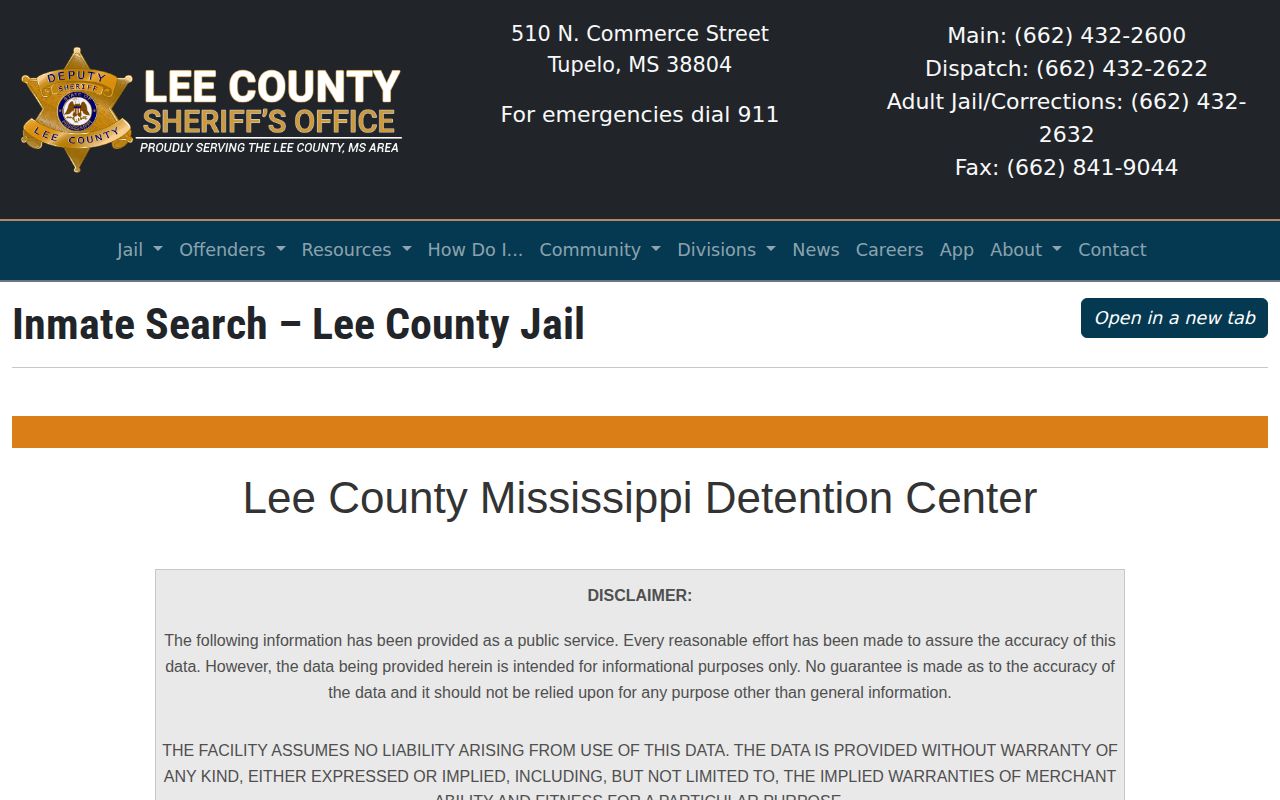
Recently Booked is not a release list. Lee County has a verified 72-hour release feed, but no separate public 24-hour feed was found.
MDOC Search for Lee County Releases
The Mississippi Department of Corrections inmate search accepts first name, last name, or MDOC ID. It covers state correctional records, not each short stay in the Lee County jail. An ID is the best match key. With a name search, test sensible spelling variants and compare the full details rather than relying on a photograph.
| Search or detail field | Use and limit |
|---|---|
| First and last name | Broad search fields that require identity checks |
| MDOC ID | The strongest public search key when known |
| Location, unit, change date | Shows institutional or community placement under MDOC |
| Sentence and conviction county | Connects the state record to the proper sentence |
| Tentative Release Date | A mutable projected milestone, not actual discharge proof |
An ERS location can mean the person physically left prison while remaining an inmate under MDOC jurisdiction. Active parole is checked in the separate state parolee search. Fully discharged history may require a narrow written request because MDOC does not promise that every discharged person stays searchable.
The official MDOC form shown here demonstrates the statewide name and ID route.
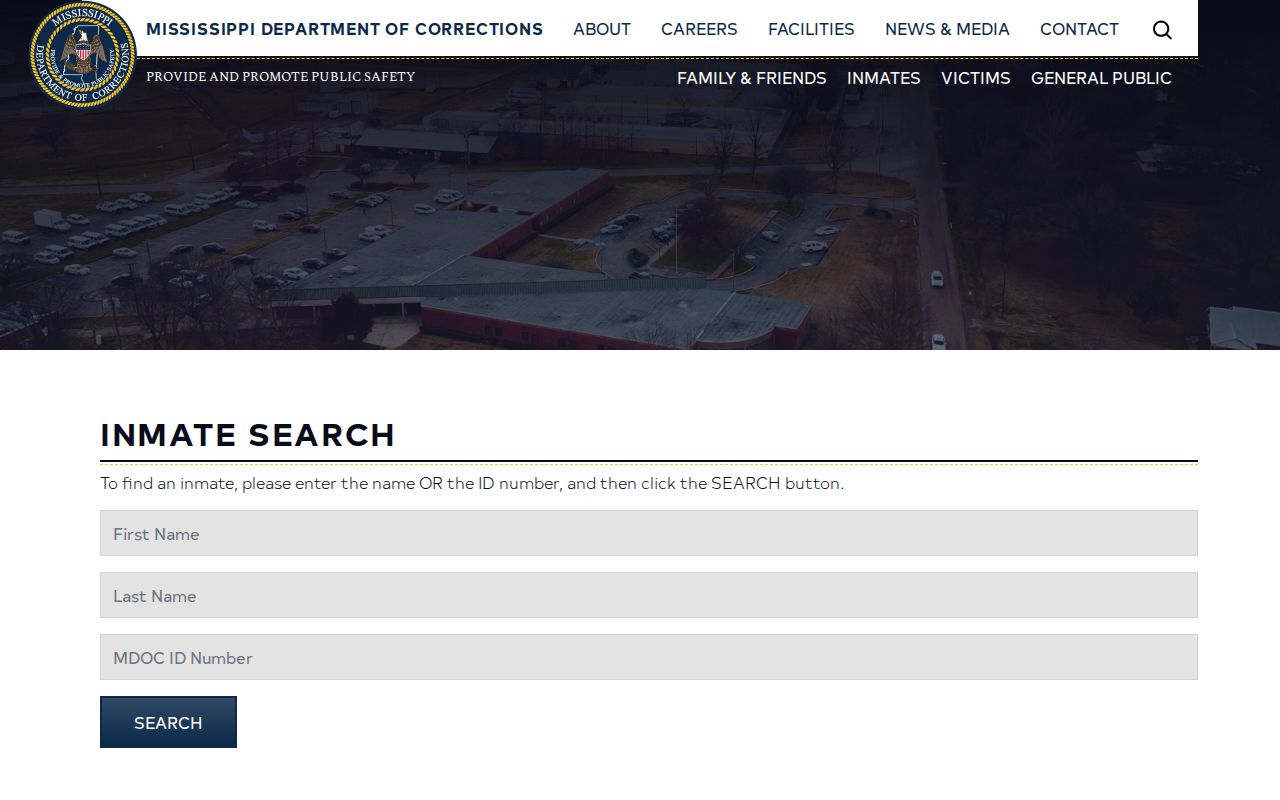
Use it after a Lee County transfer or state sentence is plausible, not as a substitute for the sheriff's county release form.
Lee County's 72-Hour Release Signal
Tiger's Released Last 72hrs list is the only verified county release window. Its rolling nature makes it useful for a recent event but poor as an archive. An entry naturally drops away after the window. Absence does not show that a person was never booked, that the case vanished, or that custody continues. The written form and court docket preserve a longer trail.
List placement and a detail date can disagree. The correct account preserves both facts: Tiger categorized the booking as released, while its public detail printed N/A for the date. The sheriff's form is stronger for the dated event. The sheriff's official mobile app also advertises roster information, charges, and release status, but its listings do not promise a separate release gallery. Use the website's exact feed as the verified source and the app as a supplemental channel.
Which Lee County Court Has Records?
The adult jail centralizes detainees from Tupelo and municipalities across Lee County, but the legal files remain split. Circuit, Justice, County, Youth, and municipal courts do not become one docket merely because bookings share Tiger. Identify the charge level and originating court, then search by exact name variants or case number. Felony matters belong in Circuit Court, while other cases may follow a different clerk route.
The Mississippi Electronic Courts system and First Circuit court information can lead to electronic records, though access may require an account and fees and not every older file is online. Locate a filed order, not just a calendar entry. A court order establishes legal authority. The jail establishes physical departure and any remaining hold.
The Lee Circuit Court source identifies the felony record route shown below.

This court branch may explain a release or commitment, but it cannot replace the custodian's departure record.
Lee County Release Supervision
Mississippi parole follows a prison sentence and Board action. Probation is a court-ordered community sentence and does not prove prior prison release. ERS is a third status in which a person may live outside prison while retaining inmate status under MDOC jurisdiction. The statewide parolee search accepts name or MDOC number and offers city and county filters.
The Lee Probation & Parole Office on Clark Street is the local MDOC community-corrections contact. It is not a jail and has no detention roster. Likewise, the Lee County Inmate Work Center remains custody for selected sentenced nonviolent inmates. Moving there from the main jail is not post-release supervision. The distinction prevents a work assignment from being mislabeled as community release.
Lee County Release Alerts and Transfers
Mississippi SAVIN uses VINE for MDOC and participating county facilities. It can issue notices for release, transfer, return to custody, escape, movement, and supervision absconding. The reporting agency controls the meaning of the event. Mississippi's Registration Link can carry a registration from county custody into MDOC or other custody after a felony transfer. That continuity is useful, but it also shows why a roster disappearance is not always a community release.
For federal sentences, the BOP inmate locator primarily covers records from 1982 forward. BOP “Released” means no longer in BOP custody, not free of supervision or another hold. Federal pretrial prisoners can remain under USMS authority in local facilities and may never appear as sentenced BOP inmates. Use the federal court and USMS for that path.
The ICE locator may retain some recent release data for about 60 days, but no result is not release proof. Spelling, transfer, age, suppression, delay, or removal may explain it. No official BOP prison, ICE detention center, or ICE contract facility was found in Lee County, so these locators apply only when case facts show federal involvement.
Lee County Custody Status Sources
Each system answers only for itself. Compare the source label, agency, access date, person identifier, and event wording. Do not flatten released, transferred, paroled, ERS, discharged, or not in custody into one result.
| Source | Shows | Does not prove |
|---|---|---|
| Tiger Active Roster | Current Lee County jail custody | Historic release |
| Tiger Released Last 72hrs | A recent county booking categorized released | Exact time or community destination |
| Sheriff Arrest/Release Form | Durable county departure record | Later state or federal discharge |
| MDOC and parolee tools | State sentence, placement, tentative date, or active parole | Every short county booking |
| VINE | Agency-supplied custody event and alerts | Meaning beyond the reporting agency |
| BOP or ICE | Custody status within that federal system | Freedom from all other custody |
Lee County Jail Plans and Records
The current adult facility was completed in 1997 and is described by the sheriff as holding about 200 people. Lee County also maintains a detention master-plan hub that followed public meetings in 2024. Planning does not establish any person's release, but it may lead to changes in facility layout, addresses, or roster technology. Current details should be checked with the county before a visit or request.
Lee County Release Facilities and Systems
The Facility Map includes custody sites, a protected juvenile function, community supervision, and federal search systems. They are listed together to route a release inquiry, not to imply that each is a jail in Lee County.
- Lee County/Tupelo Adult Detention Facility: the primary adult county booking and release source.
- Lee County Inmate Work Center: a custodial work setting, not community release.
- Lee County juvenile detention function: confidential youth records are not an adult public lookup.
- Mississippi Department of Corrections: statewide custody, ERS, parole, and discharge records.
- Lee Probation & Parole Office: local community supervision, not detention.
- Federal Bureau of Prisons / U.S. Marshals Service: federal sentence and pretrial routes.
- U.S. Immigration and Customs Enforcement: civil immigration custody when documented.
Start with the system that last held the person. A record owner can confirm its own event, while the next system confirms whether custody continued.